
Store Location
Visit the store
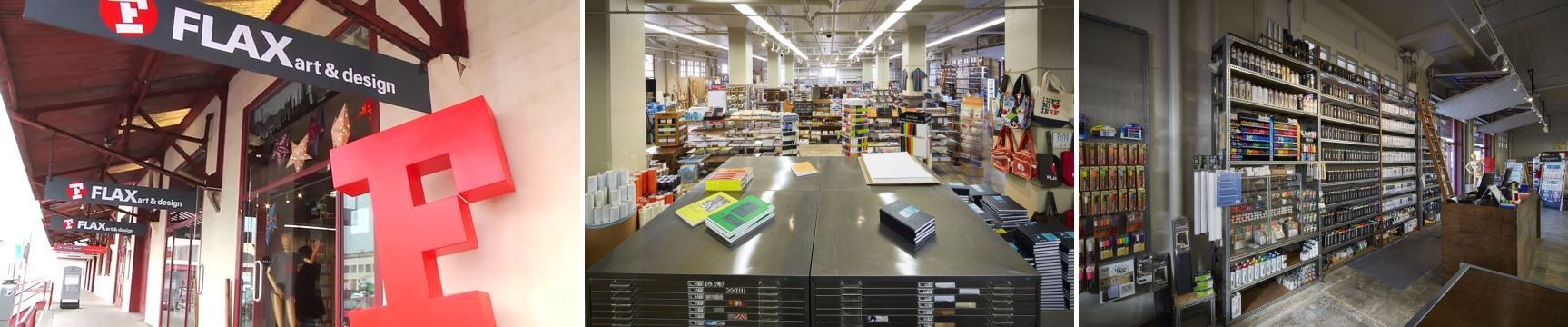
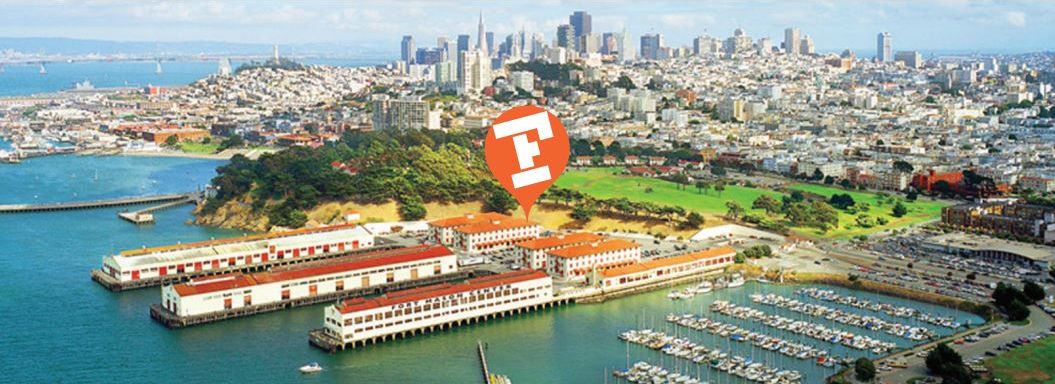
FLAX has been in San Francisco since 1938. Today you’ll find us at Fort Mason Center for Arts & Culture, inside the Golden Gate National Recreation Area. As far as we know, we’re the only art supply store in the country inside a national park.
The full range is here to see in person: paint, paper, pens, and the tools in between. So is our staff, who use this stuff themselves and are happy to talk through whatever you’re working on.
Our neighbors include Greens Restaurant, Radhaus, The Interval, and the galleries and studios of Fort Mason Art. Make a day (or night) of it.
We also host workshops in the store throughout the year. See what's coming up.
Getting Here
Address: Fort Mason Center, 2 Marina Blvd, Bldg D, San Francisco, CA 94123
Phone: 415-530-3510
Public Transit: An 8-minute walk from the MUNI 30 Stockton line.
Parking: Expansive paid lots on site at Fort Mason Center.
Hours
Monday - Saturday: 9:30am – 6:00pm
Sunday: 10:100am – 6:00pm
About Fort Mason Center for Arts & Culture
FMCAC is a nonprofit operating within the Golden Gate National Recreation Area. This former military installation hosts nearly two dozen nonprofit and arts organizations as permanent residents, and more than 1.2 million visitors a year. Hundreds of events take place on campus annually, including theater and dance performances, art installations, and special experiences that draw international interest. FMCAC has retained the industrial integrity of its landmark structures while creating a hub for the arts and places for visitors to shop and dine.
History

Fort Mason’s use as a coastal artillery post began in 1863, when the Army established Black Point Battery. Rodman cannons were installed to defend gold-rich San Francisco against potential attack during the Civil War. By the early 20th century, Fort Mason had become a logistics and transport hub for the U.S. Army. The Army built massive piers and storehouses along the waterfront, connected by railway spurs, to supply new outposts in the Philippines, Hawaii, and other Pacific islands. From the 1920s through World War II, the San Francisco Port of Embarkation played a critical role in moving supplies and troops to the Pacific. During World War II, 1.6 million American soldiers and 23.5 million tons of supplies left these piers.
In 1972, the San Francisco Port of Embarkation was listed as a National Historic Landmark. The National Park Service took over the site in the 1970s as part of the Golden Gate National Recreation Area, and FMCAC was established in 1977.
Building D

Our store is in one of four warehouses the Army completed here in 1915. Before opening in November 2015, we removed the sheetrock, flooring, and decades of clutter to expose the original surfaces, windows, and doors. Look above our glass storefront and you’ll see the hinged, canopy-style warehouse door, fully open. It still works, as do the other warehouse doors.
More on Fort Mason Center
- Visit their website
- Subscribe to their events newsletter
- Explore Fort Mason with the Golden Gate National Parks Conservancy
From Fort Mason Center: what the campus is and what it's for, below.
